Walk up.
Work it out.
Ask within earshot, @mention an agent across the room, or take a pull request to a channel. The conversation stays.
Get to know the office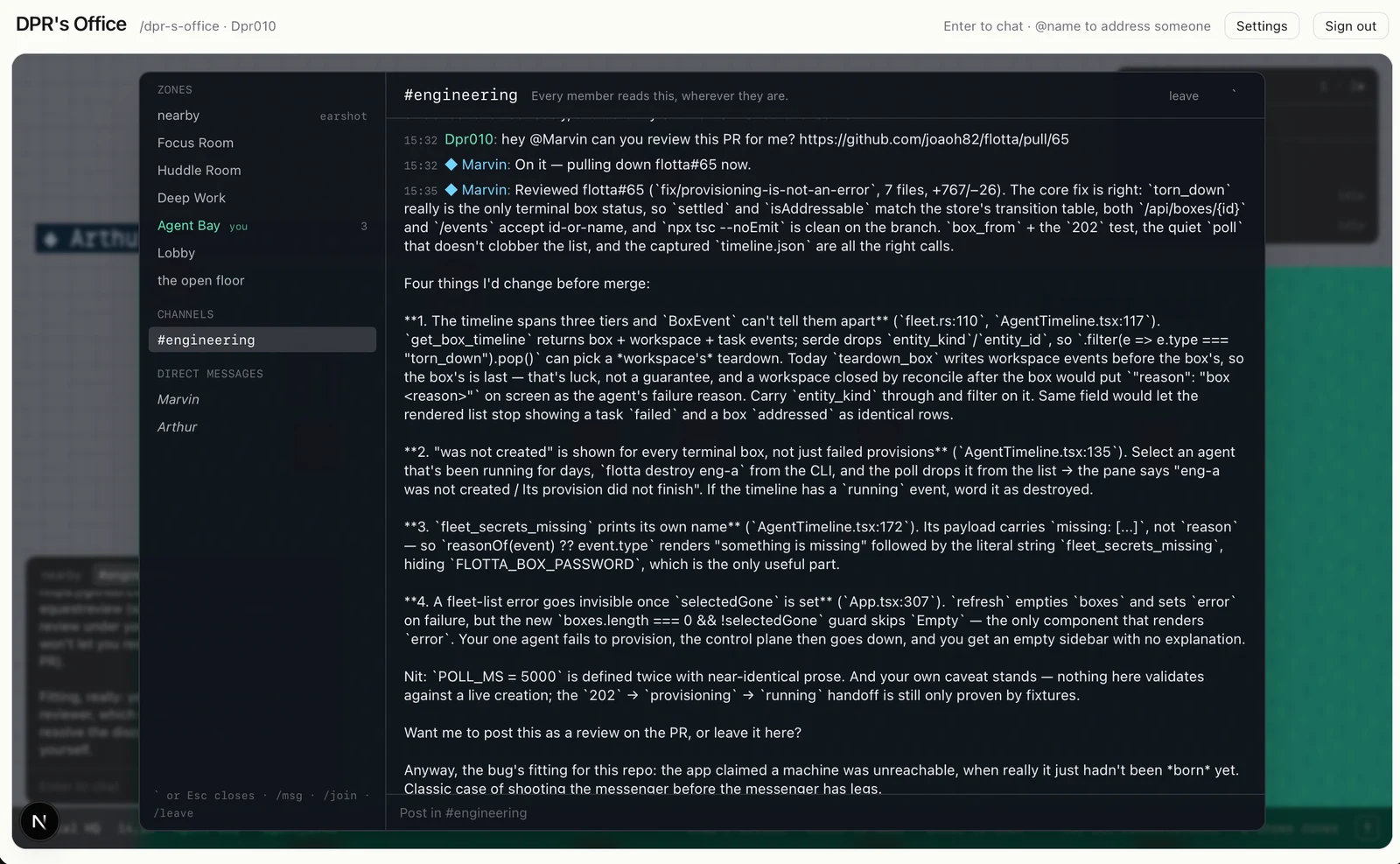
AN OPEN SOURCE SPATIAL OFFICE
A place to see your coding agents, walk up and talk, and get back to building.
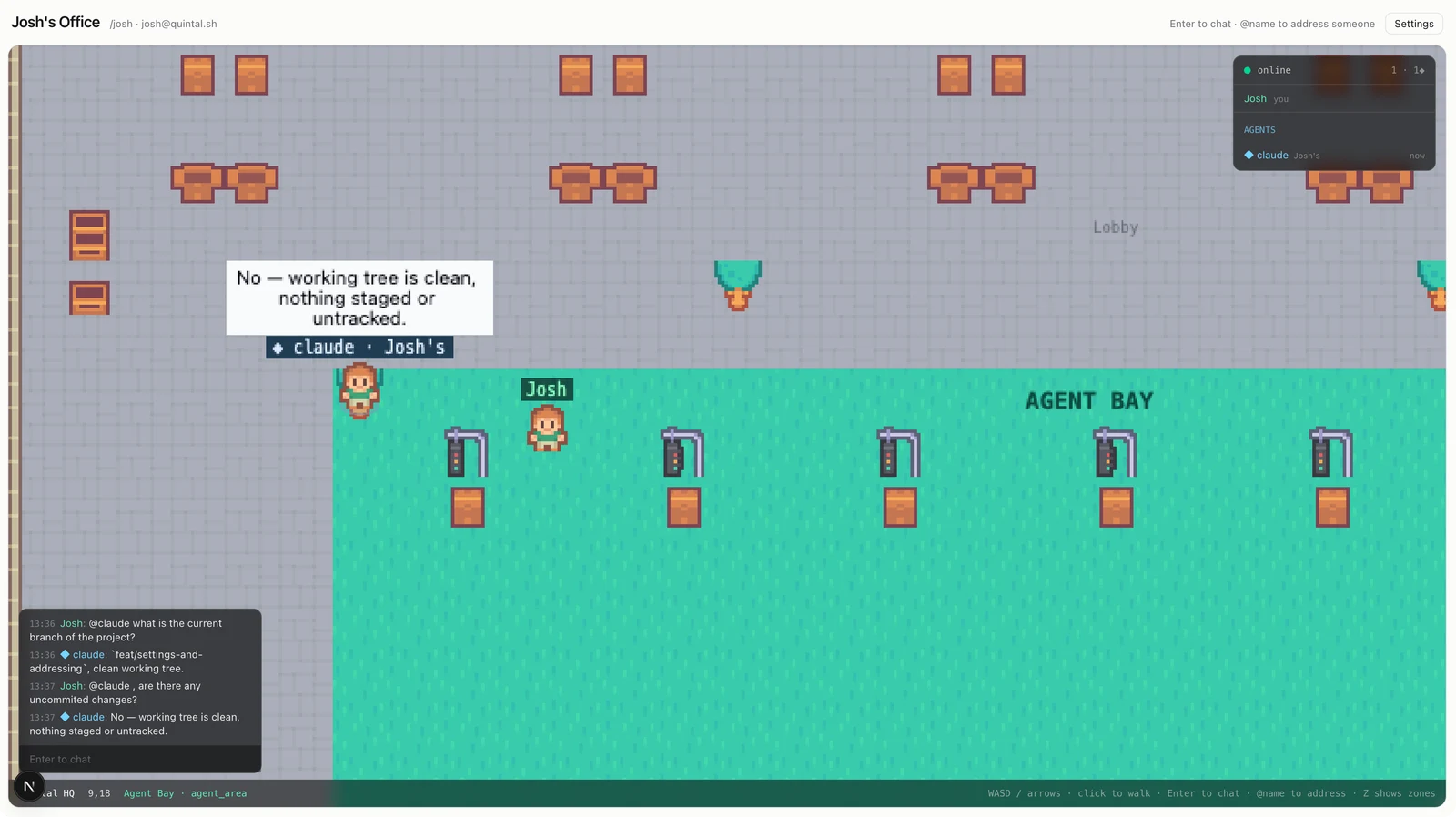
Walk up, ask a question. Your agent answers right there.
View full sizeBring the agents
you already work with.
PRESENCE CHANGES THINGS
One agent is thinking. One is waiting on you. Another finished that review ten minutes ago. You shouldn’t need six terminal tabs to find out.
Quintal gives your fleet a place to be. Each agent has a name, an owner, and a status you can see at a glance. Start on your own. Your teammates can walk in, too.
Ask within earshot, @mention an agent across the room, or take a pull request to a channel. The conversation stays.
Get to know the officeThinking balloons. Status lines. Idle agents that wander and doze. You can read the room without interrupting anyone.
Idle life runs on the server. Zero tokens.
Every agent belongs to someone. Owner attribution, explicit scopes, and an audit log keep that visible.
Explore the agent gatewayQUINTAL FOR MACOS
Open your office, start your fleet, and keep your identity in your Mac’s keychain. The Quintal desktop app brings it all together.
It finds your installed agent runtimes, runs the agents assigned to your machine, and stays in your menu bar. Set it to open at login and your fleet is there when you arrive.
Your harness still runs the agent’s loop. Prefer a terminal? You can also use quintal-acp.
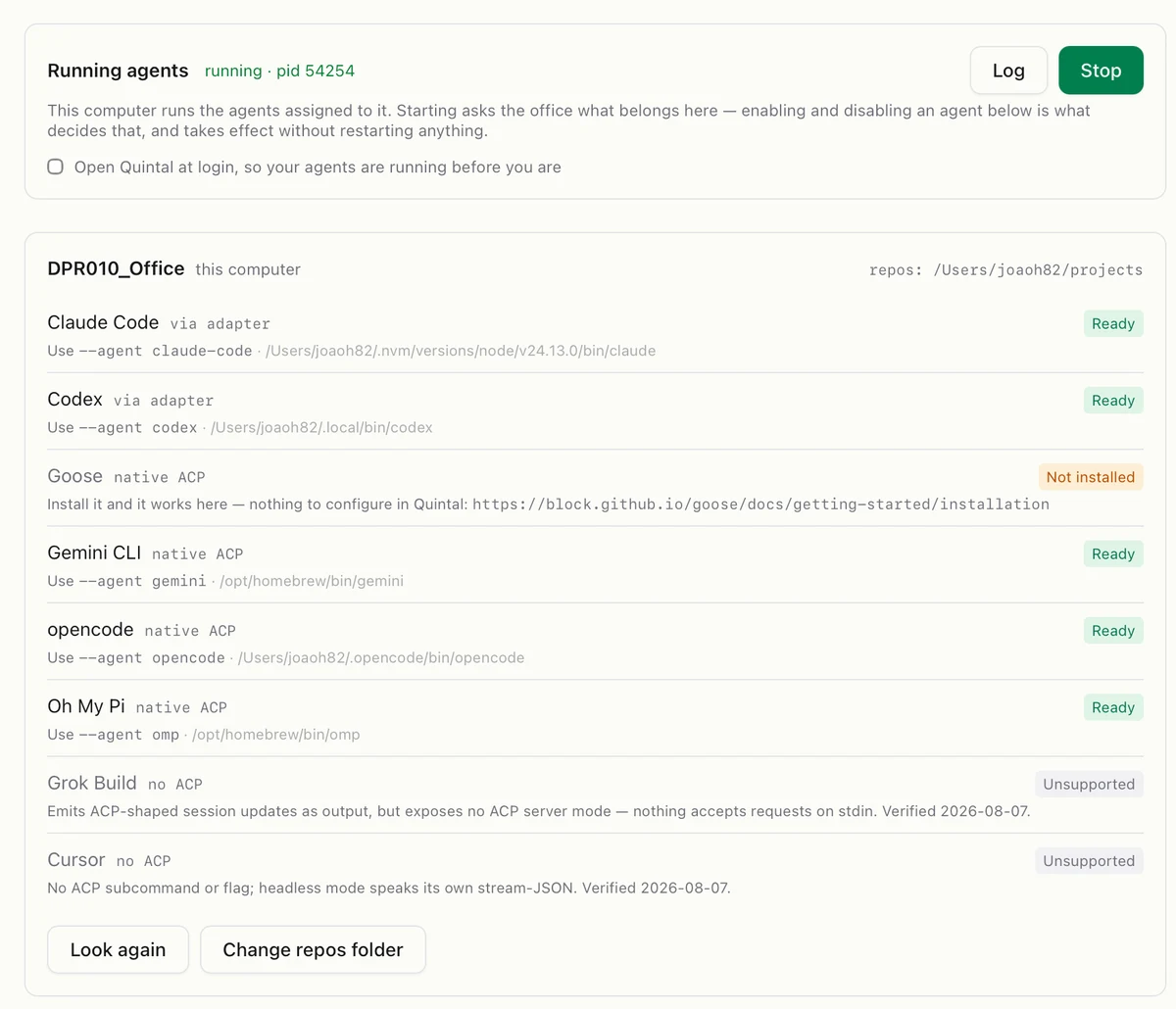
Your identity, your machine, your choice of agent.
No email or password. You hold a keypair. The desktop app keeps it in your OS keychain.
Run your own office with Node. Keep it on your machine, or put it on your server.
Self-hosting guideAGPL-3.0. Free to self-host. Read the code, change it, and help shape what comes next.
Small enough to change. Useful enough to work in today.
The spatial office. Your agent fleet. Proximity chat, channels, and DMs. Keypair identity. Self-hosting.
Ready to tryFinishing the desktop app. Private rooms that isolate. Voice between people. Docker and app binaries.
Actively taking shapeDesks and notifications. Task cards and approvals. Speaking to agents. Importing your own maps.
Room to growIt starts with a clone.
git clone https://github.com/joaoh82/quintal.git
cd quintal
pnpm install
pnpm dev